 Moon Dasha

Famous People Astrology
Vedic birth charts of well-known people, calculated from their recorded birth details. Each profile says how reliable the birth time is and shows which dasha was running at the big moments of their life.
Celebrity Birth Charts

Sachin Tendulkar
Sachin Tendulkar is widely regarded as one of cricket's most accomplished and influential batters. Raised in Mumbai, he entered international cricket at sixteen and spent the next twenty-four years carrying extraordinary public expectations with unusual composure. His compact technique, precise judgment, and ability to adapt across conditions made him successful against several generations of elite bowlers. Tendulkar became the first player to score one hundred international centuries and retired as the leading run scorer in both Test and One Day International cricket. Yet statistics explain only part of his importance. For many Indian supporters, his batting became a shared national ritual during years of rapid social and economic change. He represented preparation, patience, and quiet ambition rather than theatrical self-promotion. Teammates frequently described his curiosity about equipment, opposition strategies, and small technical adjustments, even after decades at the highest level. Following retirement, he remained involved in charitable work, youth development, public health campaigns, and sports advocacy. His Bharat Ratna recognition confirmed a legacy that extends beyond cricket into modern Indian cultural history.View Birth Chart
Sylvia Plath
Sylvia Plath was an American poet, novelist, and short-story writer whose work became central to twentieth-century literature. Her poems combine disciplined craft with startling imagery, dark humor, myth, domestic detail, and an intense examination of identity. Although she is often grouped with confessional poets, her writing reaches beyond autobiography through carefully constructed speakers and recurring symbols of rebirth, confinement, nature, and transformation. Plath was a gifted student who published from childhood, earned a scholarship to Smith College, and later studied at Cambridge on a Fulbright fellowship. Her first poetry collection, The Colossus, appeared in 1960. Her only novel, The Bell Jar, used fiction to explore ambition, gender expectations, psychiatric illness, and the isolation of a young woman trying to imagine an independent life. Much of her best-known poetry was written during a concentrated creative period in 1962. Those poems were published after her death in Ariel, although later editions raised important questions about editorial arrangement and authorial intention. Plath's reputation has continued to grow through her poems, journals, letters, and fiction. Readers value her technical control as much as her emotional force, and her work remains influential in discussions of creativity, feminism, grief, and mental health.View Birth Chart
Albert Einstein
Albert Einstein was a German-born theoretical physicist whose ideas changed modern understanding of space, time, gravity, light, and energy. After studying in Switzerland, he worked at the Swiss Patent Office while developing research that challenged established physics. In 1905 he published papers on Brownian motion, the photoelectric effect, special relativity, and mass-energy equivalence. Each addressed a foundational problem, and together they made the year famous in scientific history. His general theory of relativity, completed in 1915, described gravity as the curvature of spacetime. Observations during a 1919 solar eclipse supported a key prediction and turned Einstein into an international public figure. The Nobel Prize in Physics recognized his explanation of the photoelectric effect, a contribution that helped establish quantum theory. Einstein also questioned parts of quantum mechanics and participated in debates that continue to influence physics. Beyond science, he wrote and spoke about pacifism, civil liberties, racism, Jewish identity, education, and international cooperation. After the Nazi rise to power, he settled in the United States and joined the Institute for Advanced Study in Princeton. His image became shorthand for genius, but his deeper legacy rests on intellectual independence, imaginative thought experiments, and the willingness to reconsider assumptions that appeared immovable.View Birth Chart
Leonardo da Vinci
Leonardo da Vinci was an Italian artist, engineer, anatomist, designer, and natural philosopher whose curiosity came to embody the Renaissance ideal. Born near Vinci, he trained in Andrea del Verrocchio's Florentine workshop, where painting, sculpture, mechanics, and decorative arts were practiced together. Leonardo completed relatively few paintings, yet works such as The Last Supper and the Mona Lisa transformed portraiture, composition, gesture, and psychological expression. His subtle modeling of light and shadow gave faces and landscapes an atmospheric depth that later artists studied closely. The notebooks reveal an equally ambitious investigator. Leonardo drew muscles, bones, organs, water currents, plants, geological formations, weapons, bridges, flying machines, and theatrical devices. Many designs could not be built with the materials of his period, but they demonstrate a method based on observation, comparison, and repeated visual analysis. He moved among Florence, Milan, Rome, and France, working for rulers who valued both his artistic imagination and engineering skill. His projects were often unfinished, and his notes remained largely unpublished during his lifetime. Even so, the union of art and inquiry in his surviving work continues to shape how creativity, science, and invention are understood.View Birth Chart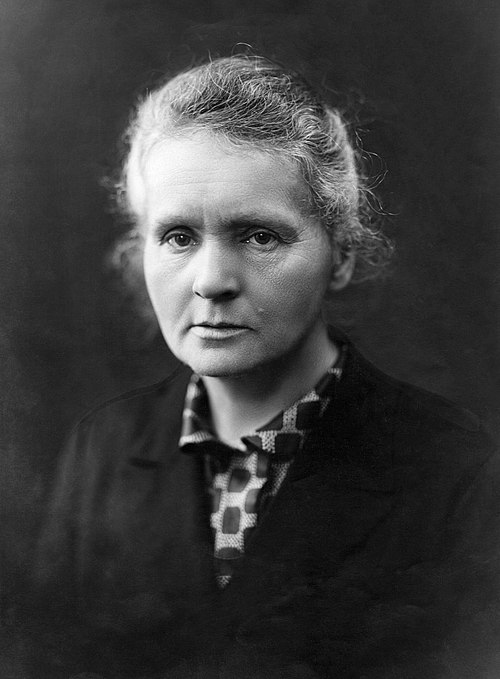
Marie Curie
Marie Curie was a Polish-born physicist and chemist whose research established radioactivity as a major field of modern science. Raised in Warsaw under Russian imperial rule, she pursued clandestine education before moving to Paris, where women had greater access to university study. At the Sorbonne she earned degrees in physics and mathematics while living with severe financial constraints. Working with Pierre Curie, she investigated unusual radiation emitted by uranium minerals and concluded that the effect came from the atom itself. Their research led to the discovery of polonium and radium in 1898. Curie later isolated radium compounds and developed methods for measuring radioactive substances. She became the first woman to receive a Nobel Prize, the first person to receive two Nobel Prizes, and the only person honored in two different scientific disciplines at that time. Her achievements were won within institutions that often excluded women from authority and recognition. During the First World War, she organized mobile X-ray units and trained operators to assist wounded soldiers. The Curie institutes in Paris and Warsaw extended her commitment to research and medical application. Her notebooks remain radioactive, a physical reminder of discoveries made before the dangers of long-term exposure were fully understood.View Birth Chart
Nelson Mandela
Nelson Mandela was a South African lawyer, liberation leader, political prisoner, and statesman who became a global symbol of resistance to apartheid. Born Rolihlahla Mandela in the Thembu royal family, he studied law and moved to Johannesburg, where racial segregation shaped every area of public life. He joined the African National Congress and helped create its Youth League, pressing the organization toward mass action. Mandela initially supported nonviolent resistance, but after escalating state violence and the banning of opposition movements, he helped establish an armed wing focused on sabotage. Arrested and convicted during the Rivonia Trial, he spent more than twenty-seven years in prison, much of that time on Robben Island. His imprisonment made him an international emblem of the anti-apartheid struggle. After his release in 1990, Mandela negotiated with President F. W. de Klerk while navigating political violence and deep distrust. Their efforts helped create South Africa's first fully representative election. As president, Mandela prioritized reconciliation, constitutional democracy, and peaceful transfer of power, though inequality remained severe. He served one term and then supported charitable, educational, and public health initiatives. His legacy combines moral courage with the difficult compromises required to move a divided country toward democracy.View Birth Chart
Marilyn Monroe
Marilyn Monroe was an American actor, model, and singer whose image became one of the most recognizable symbols of twentieth-century popular culture. Born Norma Jeane Mortenson in Los Angeles, she experienced an unstable childhood shaped by foster homes, an orphanage, and early marriage. Wartime factory photographs led to modeling work and eventually film contracts. Hollywood studios promoted her as a glamorous blonde, but Monroe developed comic timing, emotional vulnerability, and a distinctive screen presence that exceeded the limited roles she was offered. Films including Niagara, Gentlemen Prefer Blondes, The Seven Year Itch, and Some Like It Hot made her a major box-office star. Dissatisfied with low pay and stereotyped parts, she challenged the studio system, founded Marilyn Monroe Productions, and studied acting in New York. That effort helped her secure greater creative control and more demanding roles. Monroe also used her influence to support performer Ella Fitzgerald at a crucial stage in Fitzgerald's nightclub career. Behind the public persona, she lived with chronic insomnia, anxiety, painful relationships, and intense media scrutiny. Her death at thirty-six fixed her image in tragedy, but later assessments increasingly recognize her ambition, business courage, intelligence, and contribution to film comedy alongside the mythology built around her appearance.View Birth Chart
Rabindranath Tagore
Rabindranath Tagore was a Bengali poet, novelist, short-story writer, playwright, composer, painter, educator, and social thinker whose work reshaped modern Indian culture. Raised in the intellectually active Tagore family of Calcutta, he was educated largely at home and began writing at an early age. His poetry renewed Bengali literary language by bringing intimate speech, musical rhythm, spiritual reflection, and everyday rural experience into forms that could feel both classical and modern. Tagore also wrote psychologically complex fiction, political essays, dance dramas, and more than two thousand songs now known collectively as Rabindra Sangeet. His compositions include the songs adopted as the national anthems of India and Bangladesh. The English Gitanjali introduced his work to a global readership, and the 1913 Nobel Prize in Literature made him the first Asian laureate in that category. Tagore did not confine his vision to literature. At Santiniketan he built an experimental school and later Visva-Bharati, imagining education in nature and dialogue among cultures. He criticized imperial domination, aggressive nationalism, social hierarchy, and narrow communal identities. His conversations with figures such as Mahatma Gandhi and Albert Einstein reflected a lifelong effort to connect art, ethics, science, and freedom. He began painting seriously later in life, adding another original body of work to an already extraordinary career.View Birth Chart
A. P. J. Abdul Kalam
Avul Pakir Jainulabdeen Abdul Kalam was an Indian aerospace scientist, teacher, author, and statesman who served as the 11th president of India from 2002 to 2007. Born into a modest family in the island town of Rameswaram, he studied physics before training in aeronautical engineering at the Madras Institute of Technology. Kalam began his scientific career at the Defence Research and Development Organisation and later joined the Indian Space Research Organisation. As project director of the SLV-III, he helped place the Rohini satellite into orbit in 1980, an important milestone for India's space program. He later guided the Integrated Guided Missile Development Programme and became closely associated with the Agni and Prithvi missile systems, earning the popular title Missile Man of India. Kalam also served as scientific adviser to the defence minister and principal scientific adviser to the Government of India. His accessible manner, simple lifestyle, and enthusiasm for speaking with students made him unusually popular across political and social divisions. As president, he promoted national development through science, education, technological self-reliance, and a vision he called India 2020. He wrote widely for general readers and continued teaching after leaving office. Kalam received the Bharat Ratna in 1997 and remained committed to education until his death during a lecture in Shillong.View Birth Chart
Lata Mangeshkar
Lata Mangeshkar was an Indian playback singer whose voice became inseparable from the emotional language of Hindi cinema and many other Indian film traditions. Born in Indore to classical singer and theatre artist Deenanath Mangeshkar, she received early musical training from her father and appeared in his stage productions. His death in 1942 left the family in financial difficulty, prompting the thirteen-year-old Lata to act and sing professionally. After moving to Bombay, she trained further in Hindustani music and gradually challenged the heavier vocal style then favored by film studios. The success of Aayega Aanewala from Mahal in 1949 established her as a leading playback voice. Over the following decades, Mangeshkar worked with major composers, lyricists, directors, and actors, recording songs in numerous Indian languages. Her precise diction, melodic control, emotional restraint, and unusually wide range allowed her to express romance, grief, devotion, patriotism, and playfulness with equal conviction. Performances such as Ae Mere Watan Ke Logon became part of India's collective memory beyond cinema. She occasionally composed music and produced films, while her younger siblings also built distinguished musical careers. Her honors included multiple National Film Awards, the Dadasaheb Phalke Award, and the Bharat Ratna. Across more than seven decades of recording, she shaped expectations of playback singing and influenced generations of performers.View Birth Chart
Elon Musk
Elon Musk is a technology entrepreneur whose companies have pursued electric transport, commercial spaceflight, satellite communications, artificial intelligence, and infrastructure. Born in Pretoria, South Africa, he moved to Canada as a young adult and later studied economics and physics at the University of Pennsylvania. Musk left a graduate program at Stanford during the early internet boom and co-founded Zip2, which provided online business directories and maps. He then helped create X.com, an online financial services company that became part of PayPal and was acquired by eBay. In 2002, Musk founded SpaceX with the goal of reducing launch costs and enabling long-term human settlement beyond Earth. After early rocket failures, the Falcon 1 reached orbit, and SpaceX later developed reusable Falcon rockets, Dragon spacecraft, and the Starlink satellite network. Musk became an early investor and leader at Tesla, helping turn electric cars from a niche product into a central force in the global automotive industry. He has also launched or supported Neuralink, the Boring Company, and xAI. His 2022 purchase of Twitter, later renamed X, brought his management decisions and political influence under sustained scrutiny. Admirers credit his appetite for technical risk and ambitious engineering goals, while critics point to labor disputes, volatile public statements, product delays, and the concentration of private power around his companies.View Birth Chart
Anushka Sharma
Anushka Sharma is an Indian actor, producer, and entrepreneur known for combining mainstream Hindi cinema with projects that support unconventional stories. Born in Ayodhya and raised largely in Bengaluru in an army family, she initially pursued modeling and moved to Mumbai after completing her education. Her screen debut opposite Shah Rukh Khan in Rab Ne Bana Di Jodi made her an immediate national presence. Band Baaja Baaraat demonstrated her comic confidence and ability to carry a film, while Jab Tak Hai Jaan earned her a Filmfare Award for supporting performance. Sharma later appeared in major commercial productions including PK, Sultan, Ae Dil Hai Mushkil, and Sanju, moving between romance, comedy, drama, and more experimental roles. With her brother Karnesh Ssharma, she founded Clean Slate Filmz and became one of the youngest leading actors in India to establish a production company. Its first film, NH10, gave her a demanding performance and announced a commitment to darker, creator-led material. The company later backed Phillauri, Pari, Bulbbul, and the acclaimed series Paatal Lok. Sharma stepped away from the company in 2022 to focus on acting and family. She has also built fashion and business ventures, advocated animal welfare, and used her public platform to discuss workplace treatment and gendered expectations in entertainment.View Birth Chart
Virat Kohli
Virat Kohli is an Indian cricketer whose intensity, fitness standards, and sustained run scoring have made him one of the defining players of his generation. Raised in Delhi, he trained at the West Delhi Cricket Academy and progressed through age-group cricket while coping with the death of his father as a teenager. Kohli captained India to the 2008 Under-19 World Cup title and made his senior international debut later that year. He established himself first in one-day cricket, combining sharp running between the wickets with exceptional control while chasing targets. His Test career grew through difficult overseas tours, and he eventually reached the top of the batting rankings in both Tests and one-day internationals. As India's Test captain, Kohli emphasized fast bowling, aggressive field settings, and demanding fitness benchmarks. The team achieved its first Test series victory in Australia under his leadership. His Indian Premier League career with Royal Challengers Bengaluru includes the record-breaking 2016 season and, after a long wait, the franchise's first title in 2025. Kohli has received major ICC awards and holds numerous international batting records. He helped India win the 2011 World Cup, 2013 Champions Trophy, 2024 T20 World Cup, and 2025 Champions Trophy. His marriage to actor Anushka Sharma has also made the couple a central presence in Indian public culture.View Birth Chart
Osho
Osho, born Chandra Mohan Jain and widely known earlier as Bhagwan Shree Rajneesh, was an Indian spiritual teacher whose provocative lectures and experimental meditation practices attracted an international movement. Raised in Madhya Pradesh, he studied philosophy and taught at the University of Jabalpur before leaving academic life to lecture across India. He criticized organized religion, nationalism, socialism, conventional family structures, and inherited moral authority. At the same time, he drew freely from Buddhism, Hindu traditions, Jainism, Taoism, Sufism, Western psychology, and modern philosophy. His approach placed individual awareness above doctrine and presented meditation as compatible with emotional expression, sexuality, humor, creativity, and material comfort. Dynamic Meditation, one of his best-known methods, combines rapid breathing, cathartic movement, silence, and celebration. A community established around him in Pune in 1974 drew many Western seekers and became a center for meditation and therapy groups. The movement's later relocation to Oregon produced Rajneeshpuram, a large commune marked by conflict with local residents, immigration disputes, and serious crimes committed by senior followers. Osho denied directing those crimes, but the episode permanently shaped his public reputation. After returning to Pune, he adopted the name Osho. His recorded talks were published in hundreds of volumes, and meditation centers inspired by his work continue worldwide, alongside continuing criticism of his leadership, wealth, and movement culture.View Birth Chart
Lionel Messi
Lionel Messi is an Argentine footballer whose close control, vision, passing, finishing, and consistency have placed him among the sport's greatest players. Born in Rosario, he joined Newell's Old Boys as a child but faced treatment costs after being diagnosed with a growth hormone deficiency. At thirteen, Messi moved with his family to Spain and entered FC Barcelona's academy. He made his senior debut at seventeen and became the creative center of the most successful period in the club's history. With Barcelona, he won ten La Liga titles, four UEFA Champions League trophies, and numerous domestic cups while becoming the club's record scorer. His partnership with Xavi, Andrés Iniesta, and other academy graduates helped define a possession-based era admired around the world. Messi also set scoring records, including 91 goals for club and country in 2012, and received a record eight Ballon d'Or awards. His international career carried heavier pressure. Argentina lost several major finals before winning the 2021 Copa América, followed by the 2022 FIFA World Cup, where Messi received the Golden Ball. After financial constraints ended his Barcelona career, he played for Paris Saint-Germain and then joined Inter Miami, transforming interest in Major League Soccer. His reserved public manner contrasts with an expressive playing style built on rapid decisions, balance, and imagination.View Birth Chart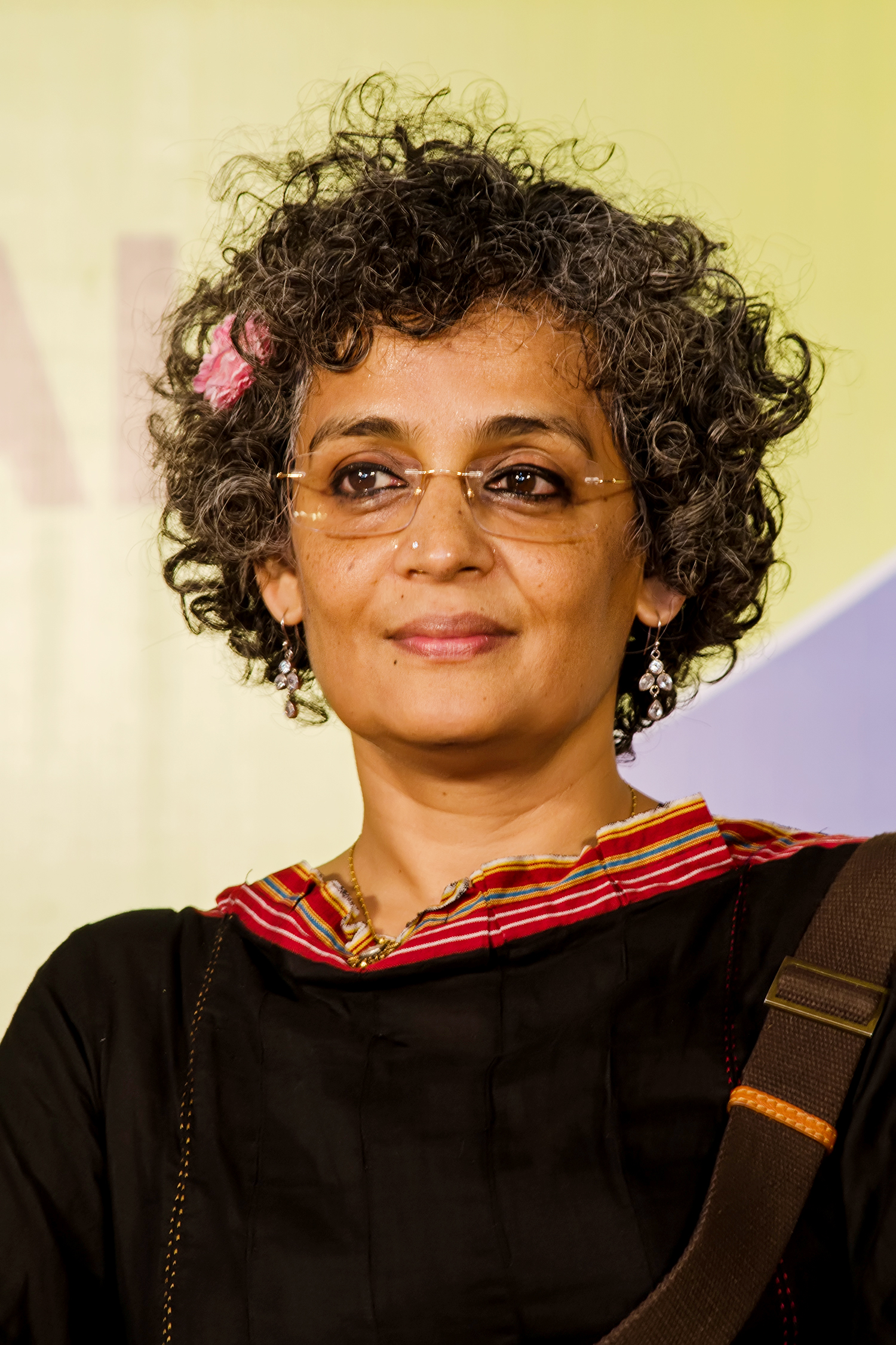
Arundhati Roy
Arundhati Roy is an Indian novelist, essayist, screenwriter, and political activist whose lyrical fiction and forceful nonfiction have made her a prominent international voice. Born in Shillong and raised largely in Kerala, she studied architecture in Delhi before working in film, television, and design. Her first novel, The God of Small Things, draws on the landscape and social structures of Kerala to examine family memory, caste, gender, forbidden love, and childhood trauma. Its inventive English prose and nonlinear form brought worldwide recognition and the 1997 Booker Prize. Rather than immediately following the novel with more fiction, Roy turned much of her attention to political essays and public campaigns. She has written against nuclear weapons, large dams, corporate globalization, militarization, Hindu nationalism, and state violence. Her work on Kashmir, Maoist insurgency, and minority rights has frequently generated controversy, legal complaints, and intense debate. Roy's essays combine reported encounters, historical argument, satire, and moral urgency, often centering communities excluded from official narratives of development. Her second novel, The Ministry of Utmost Happiness, appeared in 2017 after a twenty-year interval and brought together stories of displacement, conflict, caste, gender identity, and resistance. Roy remains admired for literary courage and criticized for positions that opponents consider selective or polarizing. The PEN Pinter Prize in 2024 recognized her uncompromising engagement with contemporary injustice.View Birth Chart