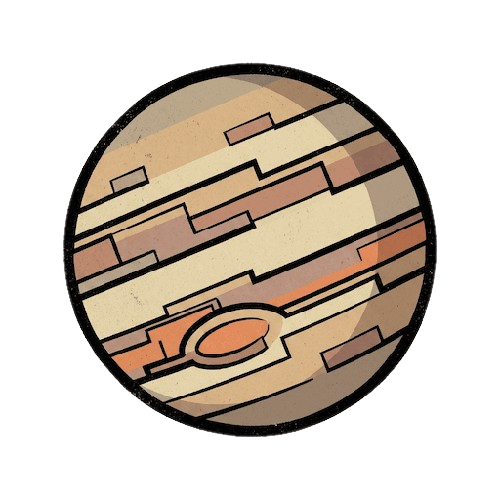
Punarvasu nakshatra, illustrated as bow and quiver

Punarvasu Nakshatra

पुनर्वसु

The seventh nakshatra, running from 20°00′ Gemini into 3°20′ Cancer. The name means the return of the light. Everything here is about the second attempt.

Sidereal span
Gemini 20°00′ to Cancer 3°20′
Ruling planet
Jupiter
Deity
Aditi, boundless mother of the gods
Symbol
Bow and quiver

Identity and classifications

Meaning
The return of the light, restoration
Sidereal span
Gemini 20°00′ to Cancer 3°20′
Ruling Planet
Jupiter
Sign and sign lord
Gemini then Cancer, ruled by Mercury then the Moon
Presiding deity
Aditi, mother of the gods
Principal symbol
A bow and a quiver of arrows
Shakti
The power to regain what was lost
Gana
Deva, the divine temperament group
Yoni
Cat
Element
Water, in the five element nakshatra grouping
Guna sequence
Rajas, then Sattva, then Rajas
Electional nature
Movable or Chara, horizontal orientation
Nadi
Adi
Naming syllables
Ke, Ko, Haa, Hee

Meaning, deity and power

Punarvasu breaks into two words meaning again and good, or again and dwelling. Both point the same way. Something was had, something was lost, and this star describes the part where it comes back.

Punarvasu is the birth nakshatra of Lord Rama. That fits the star exactly. His story is one long exile followed by a return, and what comes back at the end is not quite what left. If you were born under Punarvasu, you share a birth star with him, and Ram Navami is celebrated with this nakshatra in mind.

In Hindu mythology, Aditi is the mother of the Adityas, the solar gods, and her name means boundless or unbounded. She is the space in which things can exist. That is the mechanism behind the restoration here: not that the broken thing is repaired exactly, but that there is room to begin again.

The bow and quiver finish the picture. An arrow once fired is gone, and the quiver holds more. A person who has spent an attempt is not out of attempts. Its shakti (the special power a nakshatra carries) is regaining what was lost.

Punarvasu is known for resilience, teaching and a genuinely philosophical outlook. Natives tend to be the ones who recover, retake the exam, restart the business, and make everyone around them believe that a bad year is not the whole story.

Life journey, qualities and nature

The signature quality is recovery. A setback that would reorganise someone else's whole life gets absorbed here, and within a surprisingly short time this person is trying again, usually cheerfully. The loss was felt. It just did not become the centre of anything.

Around others this turns into a particular kind of generosity. Being near a Punarvasu native makes failure feel survivable. They teach without making you feel stupid, they get along with people from backgrounds unlike their own, and they are content on far less than you would expect.

The characteristic mistake is restarting without learning. A second attempt made in exactly the spirit of the first is not really a second attempt. This temperament can go around the same loop several times and experience each circuit as progress.

Poor treatment gets tolerated on the expectation that things will improve. Forgiveness gets handed out so quickly that nothing is ever required to change. Both come from the same generous instinct.

There is often restlessness underneath the apparent contentment that the person has never examined. This is a movable star despite everything it says about home, and the peace can be a place passed through rather than arrived at.

Strengths and weaknesses

Strengths

What comes naturally when Punarvasu is strong, by Moon or by ascendant.

  • Recovers from setbacks without being reshaped by them
  • Makes other people believe a second chance exists
  • Teaches patiently and without talking down
  • Adapts to unfamiliar people, cities and circumstances
  • Genuinely content on modest terms
  • Philosophical about what cannot be changed
  • Rebuilds things other people have already written off

Weaknesses

Where the same optimism costs something. Jupiter's condition and the sign lord for the relevant portion carry most of the difference.

  • Starting again without understanding why it failed
  • Tolerating poor treatment in the hope it improves
  • Forgiving so fast that nothing has to change
  • Assuming good intentions can replace competence
  • Restlessness hidden under apparent contentment
  • Going back to an old situation and calling it renewal
  • Vague about the practical details of the next attempt

Male and female natives

Male natives

Punarvasu men are described as respectful towards parents and teachers, modest in what they need, and reliably helpful to people in difficulty. Height, a long face and some distinguishing mark appear in the physical descriptions.

The same accounts raise dissatisfaction in family and married life, which sits oddly beside the gentleness elsewhere in the portrait. It reads best as a tension the star can produce rather than an outcome it hands out.

Female natives

Punarvasu women are described as charitable, even tempered and drawn to the arts, with a clear voice and expressive eyes. Calm is the baseline rather than the rule. Challenged directly, she argues, and she argues well.

She is credited with a strong sense of family and an ability to hold people together through a bad stretch. Hospitality comes naturally, and her home usually ends up being where everyone gathers.

The four padas of Punarvasu

Punarvasu crosses from Gemini into Cancer right at the start of its final quarter, which gives it an unusual structure. Two of its four padas are vargottama, meaning the sign repeats in the navamsa. The pada your Moon occupies also gives your traditional naming syllable.

1

The rescue, organised

Gemini 20°00′ to Gemini 23°20′Aries navamsa, MarsName sound Ke के

Aries navamsa gives initiative to the restoration. This is the pada that pioneers a second attempt or takes charge of getting something back on its feet, and there is real drive behind it. You see it in people who restart a shut down business or rebuild a team after everyone quits. The risk is enthusiasm without the honest review of why the first attempt collapsed.

2

Rebuilding with real materials

Gemini 23°20′ to Gemini 26°40′Taurus navamsa, VenusName sound Ko को

Taurus navamsa rebuilds through tangible things: money, food, land, craft and steady habits. Venus gains its own navamsa, so recovery here is slower and much more solid than in the first pada. These natives save carefully and rebuild savings after a bad year without drama. The obstacle is attachment to familiar comfort, which argues against a reinvention that is actually needed.

3

Gemini repeated

Gemini 26°40′ to Gemini 30°00′Gemini navamsa, MercuryName sound Haa हा

The sign repeats in the ninth division, making this pada vargottama, and it strengthens everything verbal. Teaching, writing, commerce and flexible thinking all come easily, and these natives explain complicated things unusually well. Repetition can produce mastery. It can also produce the same explanation delivered a hundred times while nothing gets implemented.

4

Cancer repeated, and home

Cancer 0°00′ to Cancer 3°20′Cancer navamsa, MoonName sound Hee ही

Also vargottama, because both the sign and the navamsa are Cancer, with the Moon owning each layer. Protection, family and belonging intensify sharply in this quarter, and these natives build a home other people rely on. Note that Mars is debilitated here by sign and navamsa at the same time, so anger is hard to express directly and tends to come out sideways.

Career and work

Work that restores access. Bringing someone back into education, housing, health, employment or a community they had dropped out of. The restoration theme translates unusually well into modern jobs.

  • Teaching and higher education
  • Counselling, coaching and rehabilitation
  • Writing, publishing and editing
  • Law, ethics advisory and mediation
  • Housing, resettlement and social work
  • Hospitality, travel and foreign trade
  • Childcare, paediatrics and maternal health
  • Philosophy, religious studies and Vedic learning
  • Ayurveda and holistic health practice
  • Turning around an organisation that has already failed once

The Gemini portion favours communication and adaptability, so teaching, writing and trade come readily. The Cancer quarter shifts towards the domestic and protective, and towards work done for a specific community rather than a general audience.

What matters more than the field is Jupiter's condition. Jupiter decides whether the optimism is backed by knowledge and judgement or is simply optimism. Well placed, this temperament becomes the person others trust with a second chance. Poorly placed, it becomes the person who keeps offering chances that are not warranted.

Love, relationships and marriage

Punarvasu wants a relationship where a disagreement is survivable. Somewhere it is safe to get something wrong, apologise, and carry on without the whole thing being reopened next month. Given that, it is forgiving, warm and easy to live with.

This star does tend to return. Old partners, old cities and old values keep their pull, and reconnection is a genuine theme. Be careful with that though, because the word again invites overreading. Nothing about this nakshatra predicts remarriage or reconciliation in any particular chart.

The shadow is tolerance that has stopped being a virtue. Endless chances given to a situation that remains unsafe, or forgiveness offered so fast that nothing gets repaired, both come from the same generous place. The mature version keeps the compassion and adds a limit.

Some renewals require leaving rather than returning, and that is the distinction this star usually learns the hard way. Marriage itself is read from the seventh house, its lord, Venus and the navamsa, not from the meaning of a name.

Health and common problems

The two signs point at the chest and the stomach, and Jupiter adds its own tendency towards expansion. Accounts of this star's constitution disagree more than usual, some describing robust health and others something more delicate.

  • Respiratory complaints, asthma, sinus trouble and cough
  • Digestive sensitivity and bloating from the Cancer portion
  • Liver complaints and weight gain
  • Ear infections
  • Shoulder and arm complaints from the Gemini portion
  • Anxiety that shows up through appetite
  • Old complaints that return rather than resolving fully

That last item is the one genuinely characteristic entry, and it is a pattern in the literature rather than a prediction. Nothing here diagnoses anybody.

The restorative symbolism deserves one direct statement. It is not evidence that an illness will clear up on its own. A star about recovery does not replace treatment, and a recurring complaint needs a doctor who can look at why it keeps coming back.

Planetary expression

Jupiter rules Punarvasu in the Vimshottari system. Mercury owns the first three quarters and the Moon owns the fourth. Most of the interesting dignity sits in that Cancer quarter.

JupiterExalted in the Cancer portion
Rules the nakshatra and is exalted in Cancer, though its exact exaltation degree at 5° Cancer falls just past this star, in Pushya. Wisdom, generosity and the ability to see a way forward. This is the placement that decides most about how the star behaves.
MercuryOwn sign in the Gemini portion
Owns the first three quarters and supplies the teaching, writing and trading ability this star is known for. Comfortable with the flexibility the nakshatra asks for.
MoonOwn sign in the Cancer portion
Owns the fourth quarter and is doubly at home there, since that pada is vargottama in Cancer. Emotional memory, attachment to home, and a protective instinct that strengthens sharply in the final quarter.
MarsDebilitated in the Cancer portion
Acts decisively in the first pada's Aries navamsa, then runs into trouble. In the fourth quarter it is debilitated by sign and navamsa at once, so assertion turns indirect and frustration comes out sideways.
Venus
Comfortable here, and particularly supported in the second pada's Taurus navamsa. Adds warmth and a taste for the good version of an ordinary life.
Sun
Neither exalted nor debilitated across this star. It tends to give a dignified, teacherly presence, especially where Jupiter supports it.
Saturn
Slows the recovery down and makes it more deliberate, which is often exactly what this star needs. Afflicted, it turns the hopefulness into a grind and the returns into repetitions.

Remedies and life advice

Remedies for Punarvasu address Aditi as the deity and Jupiter as the ruling planet. What they aim at is making the next attempt wiser rather than simply more hopeful.

Deity worship

Aditi is approached as the cosmic mother, for protection of the family and for space to begin again. Given that Rama was born under this nakshatra, Rama worship is especially suited to it, and many natives keep a practice around Ram Navami. Vishnu is worshipped alongside. Thursday belongs to Jupiter and is the customary day for work on the ruling planet.

Mantras

  • Om Aditaye Namah, 108 times, for the deity of the star
  • Jupiter beeja mantra: Om Graam Greem Graum Sah Gurave Namah, 108 times on Thursday
  • The Rama Raksha Stotra or the Vishnu Sahasranama, recited regularly, both closely associated with this star

Charity and observance

  • Donate yellow items on Thursday: turmeric, chana dal, bananas or books
  • Support education specifically, which matches both the deity and the ruling planet
  • Keep the house clean and welcoming, an observance attached to this star more than to most
  • A five faced rudraksha is worn for Jupiter. Buy from a source you trust and consult a qualified practitioner first

Life advice

  1. Before starting again, write down what actually went wrong last time. Your optimism is a strength everywhere except in that one review, which it tends to skip.
  2. Separate returning from renewing. Going back to the same arrangement in a better mood is not a second chance. It is the first one repeated.
  3. Put a limit on the chances you extend. Compassion without a boundary is how a generous person ends up funding somebody else's refusal to change.
  4. Teach something. This star consolidates what it knows by handing it on, and the knowledge often does not settle until it has been explained to someone.
  5. Take the restlessness under the contentment seriously instead of arguing with it. It is usually information about something unresolved.

Less known distinctions

Three structural details about this star that usually get missed.

Two vargottama quarters, not one

Because Punarvasu crosses a sign boundary exactly where its fourth pada begins, both the third and fourth repeat their sign in the navamsa. Gemini repeats in the third and Cancer in the fourth. No other nakshatra is arranged quite like this, so half the star carries the intensification vargottama brings.

Movable, despite all the talk of home

The electional classification is chara, movable, which suits travel, relocation and anything meant to change position. That sits strangely beside Aditi, the Cancer quarter and all the domestic symbolism. The tension is real rather than an error in the tables.

The quiver is a reserve, not a guarantee

Having arrows left is not the same as hitting the target. The practical question this star asks is whether the next attempt is better informed than the last one, not simply whether another attempt is available.

Frequently asked questions

In short

Punarvasu is the light coming back. It describes recovery rather than luck: losing something, absorbing it, and setting out again without the loss defining you. Aditi supplies the room to do that in and the quiver supplies the arrows. Rama's story is the whole nakshatra in one life.

Whether that becomes wisdom or a loop depends on the one thing this star is worst at. Going around again is easy here. Going around having understood what happened is the harder version, and that is where all of its real value sits.