 Moon Dasha
Marie Curie Astrology Birth Chart
According to sidereal / Vedic astrology
Physicist, Chemist, Scientist
- Date of Birth
- November 7, 1867
- Time of Birth
- 12:00Uncertain accuracy
- Place of Birth
- Warsaw, Congress Poland, Russian Empire
UTC+1:00 · 52.2297 N, 21.0122 E
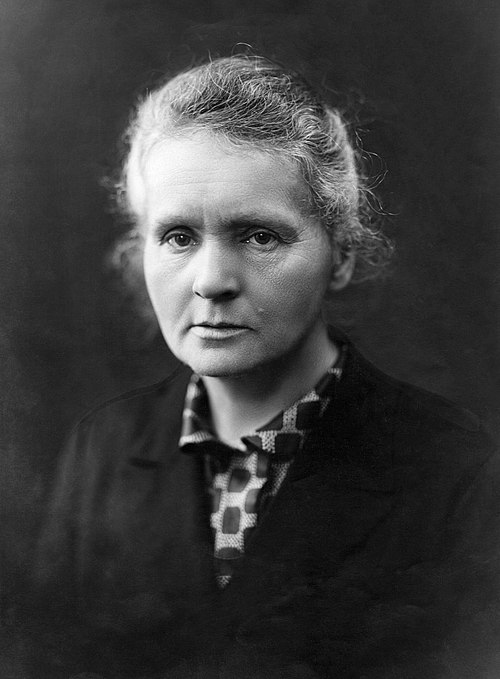
About Marie Curie
Marie Curie was a Polish-born physicist and chemist whose research established radioactivity as a major field of modern science. Raised in Warsaw under Russian imperial rule, she pursued clandestine education before moving to Paris, where women had greater access to university study. At the Sorbonne she earned degrees in physics and mathematics while living with severe financial constraints. Working with Pierre Curie, she investigated unusual radiation emitted by uranium minerals and concluded that the effect came from the atom itself. Their research led to the discovery of polonium and radium in 1898. Curie later isolated radium compounds and developed methods for measuring radioactive substances. She became the first woman to receive a Nobel Prize, the first person to receive two Nobel Prizes, and the only person honored in two different scientific disciplines at that time. Her achievements were won within institutions that often excluded women from authority and recognition. During the First World War, she organized mobile X-ray units and trained operators to assist wounded soldiers. The Curie institutes in Paris and Warsaw extended her commitment to research and medical application. Her notebooks remain radioactive, a physical reminder of discoveries made before the dangers of long-term exposure were fully understood.
Life Events
Curie left Warsaw for Paris in 1891 and completed demanding university degrees while supporting herself through tutoring. She married physicist Pierre Curie in 1895, beginning a partnership that joined scientific work with family life. After Henri Becquerel's discovery of uranium rays, she designed careful measurements and coined the term radioactivity. The Curies announced polonium and radium in 1898, then processed large quantities of pitchblende under difficult laboratory conditions. Marie, Pierre, and Becquerel shared the 1903 Nobel Prize in Physics. Pierre's sudden death in 1906 left her widowed with two daughters, but she continued their research and became the Sorbonne's first female professor. Her 1911 Nobel Prize in Chemistry recognized the discovery of radium and polonium and the isolation of radium. During the First World War she organized radiological vehicles and helped train medical staff. Later fundraising trips supported radium research and treatment. Curie died from aplastic anemia in 1934, most likely connected to prolonged radiation exposure. Her institutions continued advancing physics, chemistry, and cancer medicine.
Life Timeline
- 1891
Moved to Paris to study physics, chemistry, and mathematics at the Sorbonne.
- 1895
Married Pierre Curie, beginning a scientific and personal partnership that shaped their most important discoveries. They shared laboratory responsibilities while raising a family and resisting rigid academic hierarchies.
- 1898
Discovered the radioactive elements polonium (named after her native Poland) and radium with Pierre Curie.
- 1903
Awarded the Nobel Prize in Physics, becoming the first woman to win a Nobel Prize.
- 1906
Lost Pierre Curie in a street accident and accepted his professorship at the Sorbonne. Her appointment made her the university's first female professor and allowed her to continue their research independently.
- 1911
Awarded her second Nobel Prize, this time in Chemistry, for the isolation of pure radium.
- 1914
Responded to the First World War by organizing mobile radiography units, later called little Curies. She helped equip vehicles and trained operators so surgeons could locate bullets and fractures more accurately.
- 1921
Traveled to the United States and received one gram of radium funded through a public campaign led by journalist Marie Meloney. The valuable material supported research at Curie's Paris institute.
- 1934
Passed away from aplastic anemia, believed to be caused by long-term exposure to radiation during her research.
D1Rashi Chart
D9Navamsa Chart
Planetary Positions
| Planet | Sign | Degrees | Nakshatra | Pada |
|---|---|---|---|---|
| Calculating chart | ||||
Mahadasha Timeline
Calculating chart


